
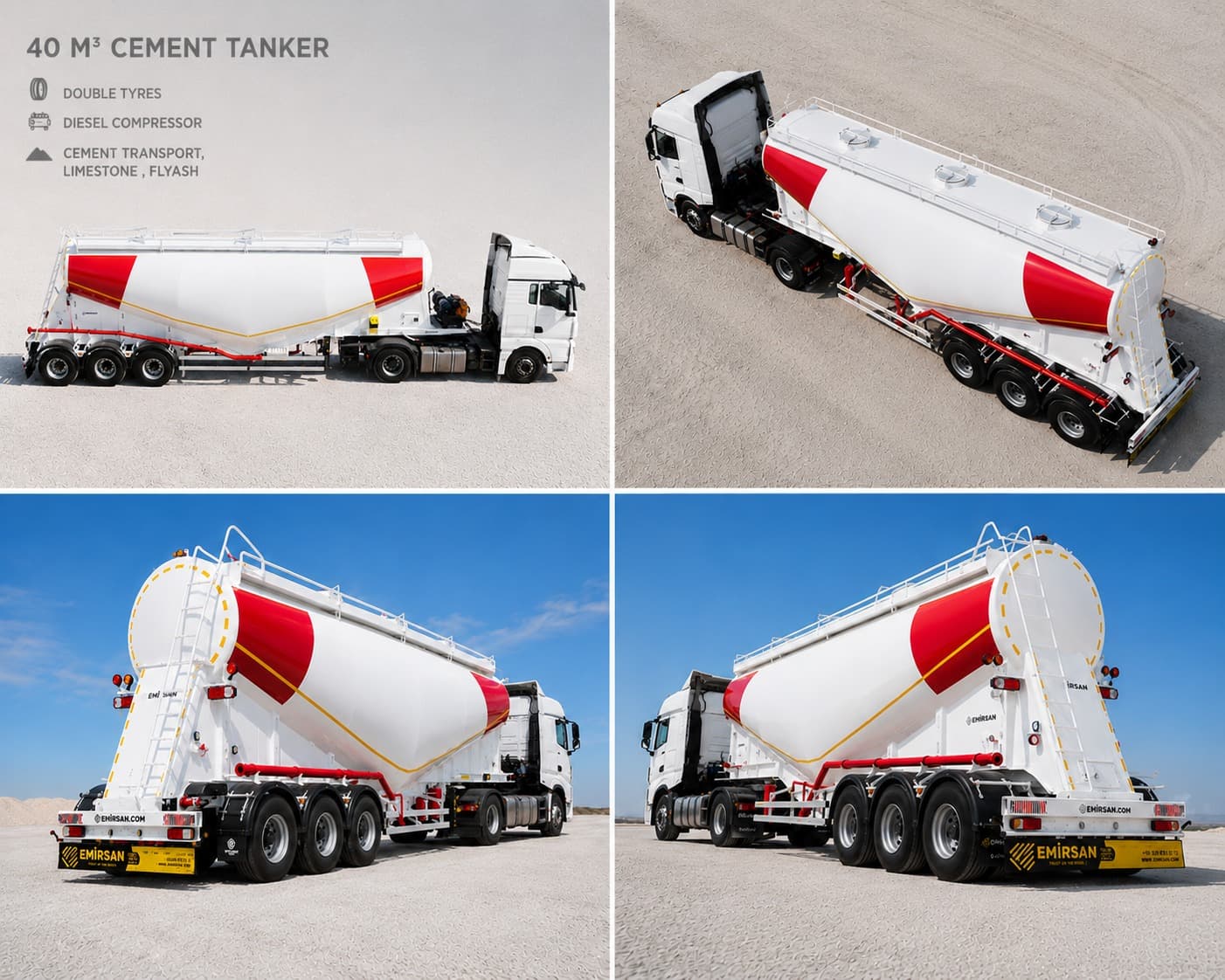
Cement Tanker Semi Trailer: Applications, Safe Operation, Maintenance and Buying Guide
A cement tanker semi trailer, also known as a bulk cement tanker trailer, cement silo trailer, or dry bulk tanker trailer, is a specialized transport vehicle designed for the safe and efficient transportation of dry bulk powder materials.
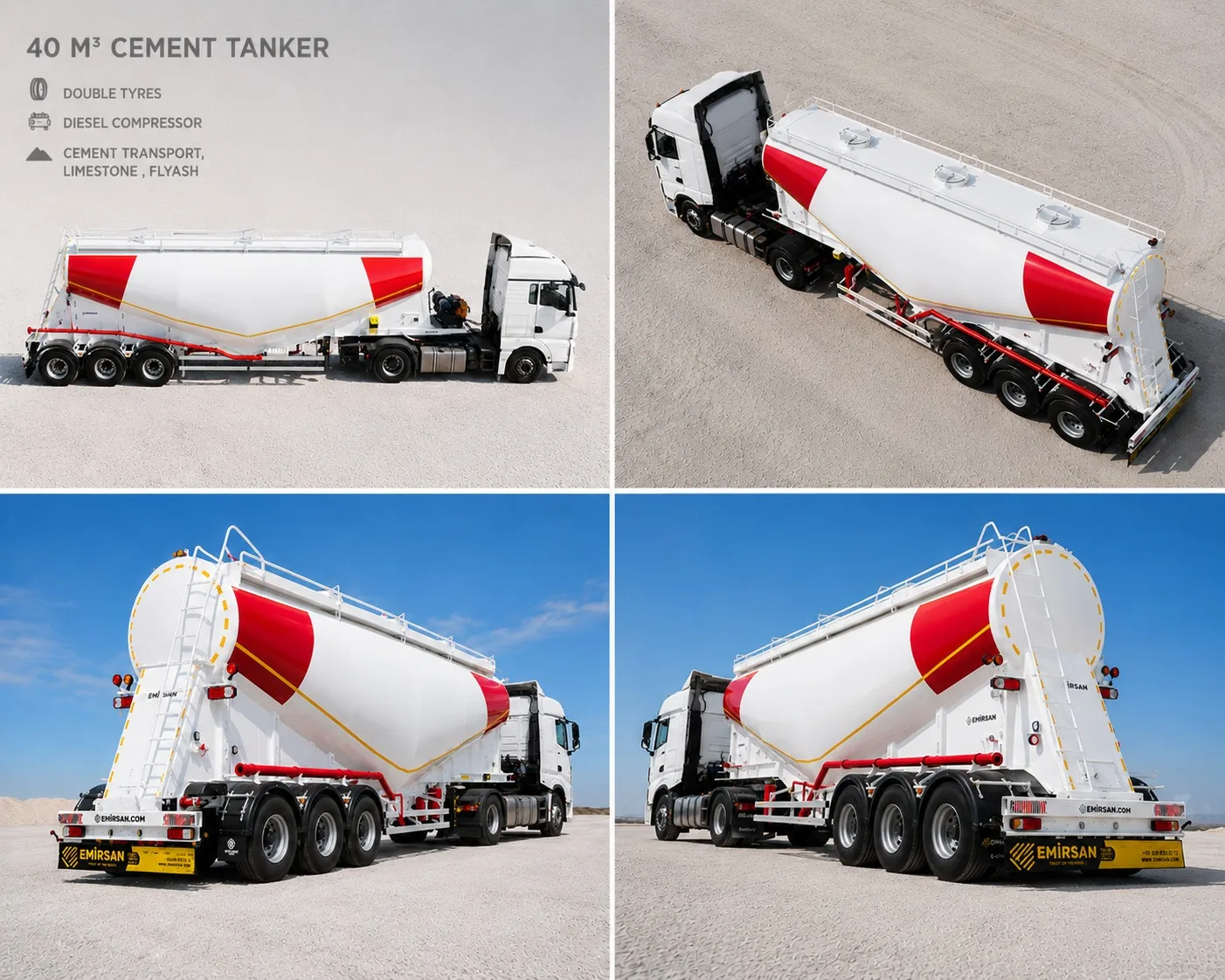
These trailers are widely used in the cement, construction, mining, infrastructure, ready-mix concrete, and industrial raw material sectors. Thanks to their pneumatic unloading systems, bulk materials can be transported in a sealed tank and discharged directly into storage silos, helping operators achieve faster, cleaner, and more efficient logistics.
For transport companies and industrial operators, selecting the right cement tanker semi trailer is important not only for transportation capacity but also for operational efficiency, unloading performance, safety, maintenance costs, and long-term durability.
1. What Is a Cement Tanker Semi Trailer?
A cement tanker semi trailer is a pressure-capable bulk transport trailer specifically engineered to carry dry powdered or granular materials.
Depending on the material density, axle configuration, legal gross vehicle weight, and local transport regulations, trailer capacities commonly range from approximately 30 m³ to 60 m³ or more.
These trailers are primarily designed for transporting dry bulk materials that can be loaded and unloaded through pneumatic systems.
2.Materials That Can Be Transported
Although primarily designed for cement transportation, pneumatic tanker trailers can also carry a variety of other dry bulk materials, depending on their technical configuration and operating conditions.
Common materials include:
- Cement
- Fly ash
- Hydrated lime
- Powdered limestone
- Mineral powders
- Industrial fillers
- Fine dry raw materials
3.Safe Operation of a Cement Tanker Semi Trailer
Safety is one of the most important aspects of dry bulk tanker operation. Because pneumatic tankers operate under pressure, proper operating procedures should always be followed to protect personnel, equipment, and transported materials.
3.1 Never Exceed the Permitted Working Pressure
The tank must always be operated within the manufacturer's specified working pressure.
Operators should never attempt to accelerate unloading by applying pressure beyond the approved operating limits.
Pressure gauges, safety valves, and pressure-control components should be inspected and maintained regularly.
Manholes or access points must never be opened while the tanker remains pressurized. Before opening any part of the tank, operators must confirm that it has been completely depressurized according to the manufacturer's operating procedures.
3.2 Check Safety Valves Regularly
Safety valves are critical components of every pneumatic tanker.
A malfunctioning, blocked, or incorrectly adjusted safety valve can create serious safety hazards during operation.
Inspection and maintenance intervals should always follow the manufacturer's recommendations and all applicable regulations.
3.3 Monitor Pressure During Unloading
Tank pressure should be monitored continuously throughout the unloading process.
Unexpected pressure increases may indicate problems such as:
- Blocked discharge lines
- Incorrect valve positions
- Restricted material flow
- Hose obstructions
- Problems with the receiving silo
- Improper aeration
If abnormal pressure behavior occurs, operators should stop the unloading process and identify the cause rather than simply increasing compressor output.
3.4 Inspect Hoses and Connections
Discharge hoses and couplings operate under pressure and should always be inspected before unloading.
Check for:
- Cracks
- Excessive wear
- Damaged couplings
- Loose connections
- Air leakage
- Deformation
Damaged hoses or fittings should never be used.
3.5 Verify Receiving Silo Conditions
Safe unloading depends not only on the trailer but also on the receiving facility.
Before discharge, operators should verify that:
- The correct silo is connected.
- The receiving silo has sufficient available capacity.
- Ventilation and filtration systems are functioning properly.
- Connections are compatible.
- The receiving facility is ready for unloading.
Overfilling or over-pressurizing a receiving silo can create serious operational and safety risks.
3.6 Use Appropriate Personal Protective Equipment (PPE)
Cement and other fine powders can generate airborne dust during connection, disconnection, and maintenance.
Depending on the transported material and site requirements, appropriate PPE may include:
- Safety glasses or goggles
- Dust protection
- Protective gloves
- Safety footwear
- Protective clothing
- Hearing protection when working near operating compressors
Operators should always follow the material safety data sheet (MSDS) and all workplace safety requirements for the transported product.
*
How to Achieve Efficient Cement Tanker Unloading
Efficient unloading is a major priority for transport companies because it directly affects vehicle turnaround time, operating costs, and overall productivity.
Several factors influence discharge performance.
Compressor Performance
The compressor must provide sufficient airflow and operating pressure for both the tanker design and the transported material.
A larger compressor does not automatically result in faster unloading. The complete pneumatic system—including air lines, aeration components, valves, and discharge piping—must work together efficiently.
Tank Geometry
The internal geometry of the tank plays an important role in material flow.
A properly engineered tank helps guide material toward the discharge outlet, reducing residual cargo and improving unloading efficiency.
Aeration System
The aeration or fluidization system introduces air beneath or through the transported material to improve its flow characteristics.
Proper airflow distribution helps:
- Reduce unloading time
- Improve material movement
- Minimize residual material
- Reduce unnecessary compressor operating time
Discharge Pipe Design
The design of the discharge piping also affects unloading efficiency.
Pipe diameter, bends, valve configuration, and hose length all influence airflow resistance.
Excessively long hoses, unnecessary bends, or restricted pipelines can significantly increase unloading time.
Material Characteristics
Different dry bulk materials behave differently during pneumatic discharge.
Important characteristics include:
- Density
- Particle size
- Moisture content
- Flowability
- Compaction tendency
A tanker optimized for cement may require different operating parameters when transporting fly ash or other powdered materials.
1.Cement Tanker Semi Trailer Maintenance
Preventive maintenance is essential for improving vehicle reliability, ensuring safe operation, reducing downtime, and extending service life.
Daily or Pre-Trip Inspection
Before each trip, operators should inspect:
- Tires and tire pressure
- Wheel nuts
- Brake components
- Air suspension
- Lighting system
- Air connections
- Discharge valves
- Hoses and couplings
- Pressure gauges
- Overall visible structural condition
Pneumatic System Maintenance
The pneumatic system should be inspected regularly, including:
- Compressor
- Air lines
- Filters
- Safety valves
- Pressure gauges
- Non-return valves
- Aeration system
- Discharge valves
Air leaks can reduce unloading efficiency, increase compressor operating time, and raise maintenance costs.
Tank Inspection
The tank body should be routinely checked for:
- Cracks
- Deformation
- Corrosion
- Damaged welds
- Leakage
- Manhole sealing problems
Any structural repair involving pressure-related tank components should always be carried out according to applicable engineering standards and regulatory requirements.
Chassis and Suspension Inspection
The chassis experiences continuous dynamic loads throughout the trailer's service life.
Regular inspections should include:
- Main chassis structure
- Crossmembers
- Kingpin area
- Suspension mounting points
- Axle connections
- Landing gear
- Welded joints
Early identification of wear, fatigue, or structural damage helps prevent costly repairs, minimizes downtime, and improves long-term operational safety.