
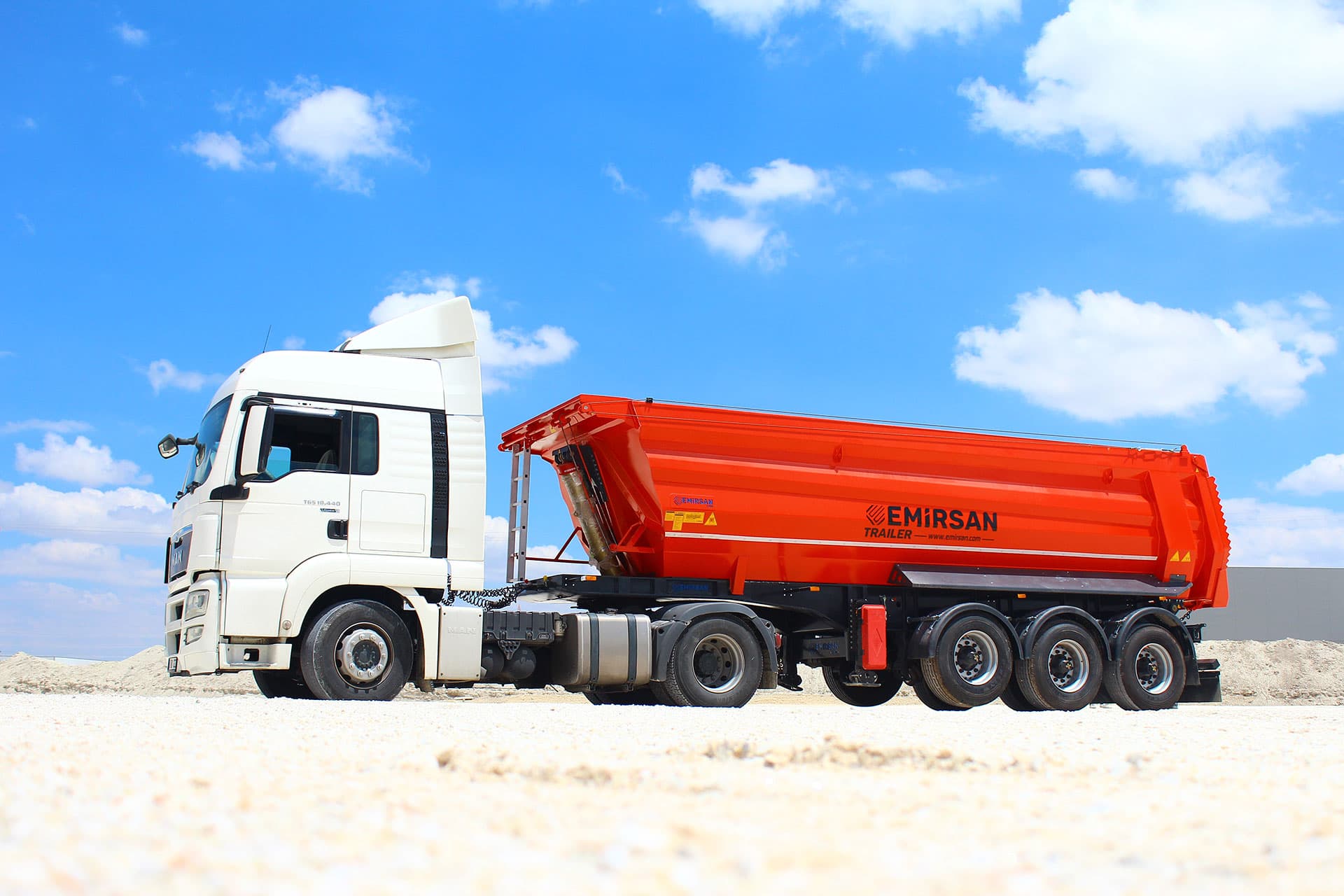
When someone messages us saying "I want to buy a tipper", the first thing we ask isn't price. It's "what are you hauling?" Because what people call a tipper is actually five different trailers, and picking the wrong one can cut tire life in half.
We've been building tippers for twenty-five years at our Konya plant. Here's how to think about which model fits which job, and the mistakes we see most often.
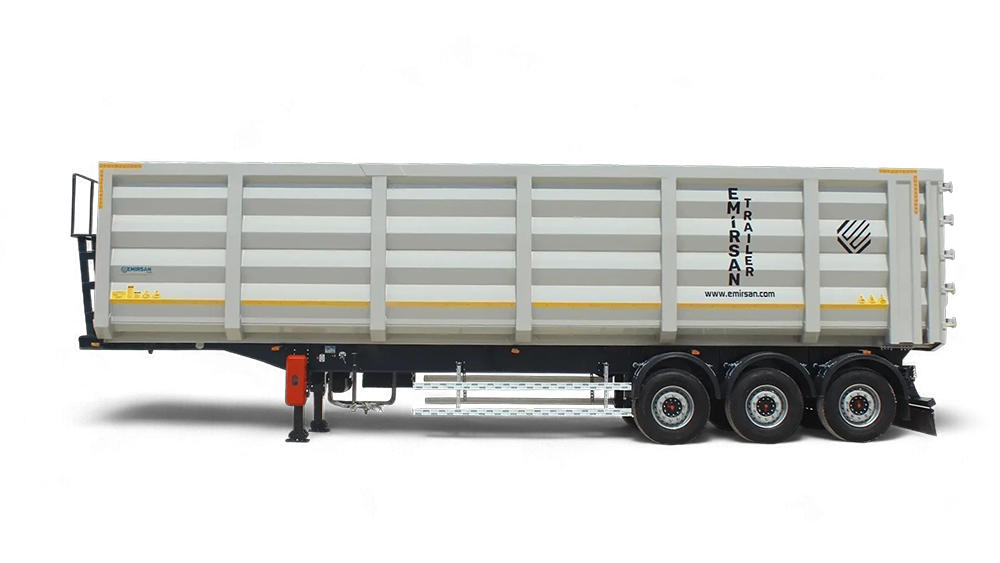
Hauling scrap metal: scrap type
A pile of scrap iron spills over the sides of a standard tipper. That's why we always point scrap haulers to the scrap type: higher side walls, 60-80 cubic metre volume, accordion-style rear gate that opens fast. The floor is reinforced with Hardox HB-450 — regular steel punctures within a year, Hardox lasts four to five.
We sell this model to recycling plants, steel mills, and scrap exporters. Net payload sits at 25-30 tonnes.
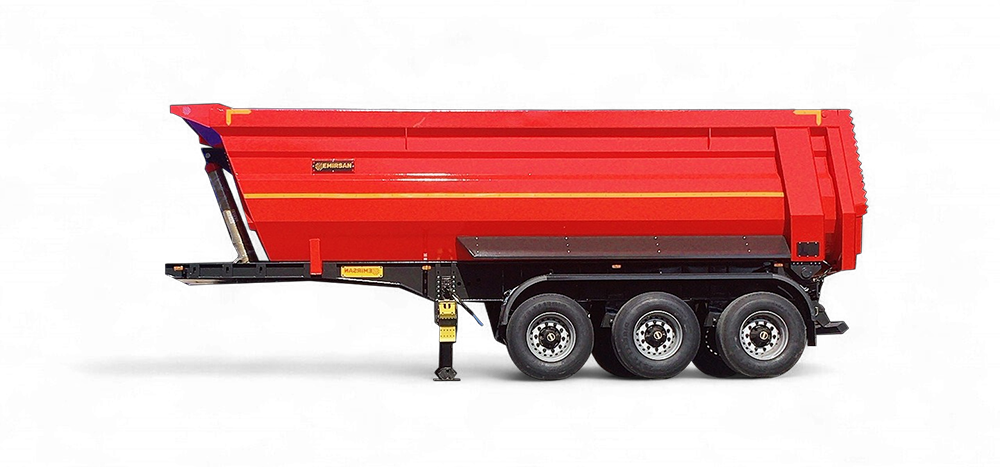
Sand, gravel, asphalt: pool type
Construction firms ask about this one most often. The U-shaped pool body distributes the load evenly and lowers the tipping angle. Throwing gravel into a flat box is risky — it piles in the corners and unbalances you in corners. In a pool body, the material flows to the centre on its own.
Volume sits at 25-30 cubic metres. Looks smaller but loads more evenly and drives more safely. Standard equipment for asphalt contractors and aggregate logistics.
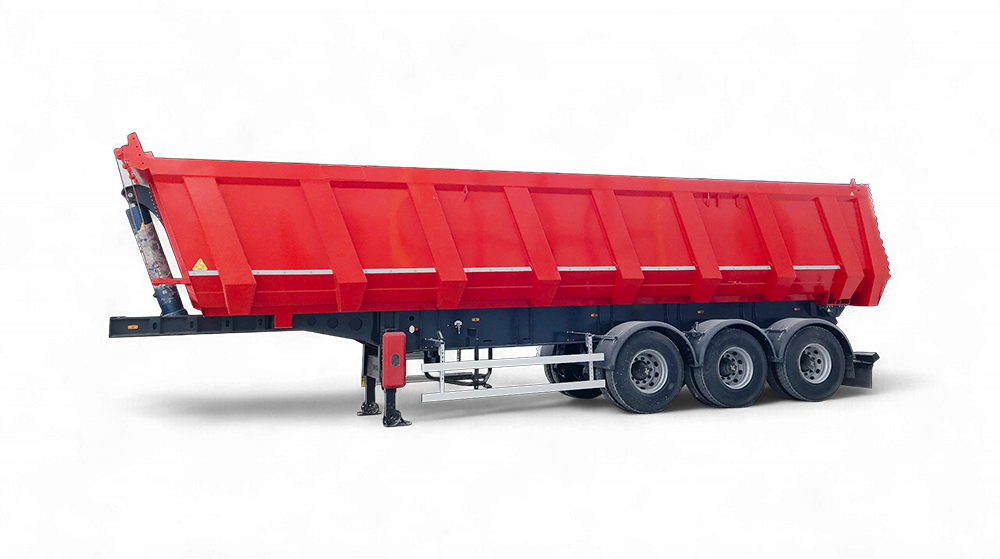
Mining and heavy rock: rock type
If you're working a quarry, the pool type and scrap type won't last. Half-metre rocks weighing five hundred kilograms fatigue the floor. For the rock type we push floor thickness above 8 mm, reinforce the rear gate corners, and raise axle clearance for off-road.
This is for mining operations and stone quarries. It's overkill for urban construction — too heavy, too expensive. But on a mine site there's no real alternative.
Tunnel and confined spaces: rear-eject
Anyone who's built a tunnel knows you can't tip a trailer — there's no clearance overhead. That's where the rear-eject comes in: the trailer stays horizontal and a hydraulic blade pushes the load out the back. A solution designed for confined-space safety.
Weight distribution stays constant throughout the cycle, no tipping action, and easier on the driver too. Less common in Türkiye but we see it often on big tunnel projects.
Municipal and urban work: truck-mounted
A compact solution that mounts directly to a truck chassis — no tractor needed. For municipal works, smaller contractors, and farmers. Capacity sits in the 8-15 tonne range, manoeuvring is easy, hydraulic tipping is fast.
Not enough for large logistics fleets, but the right tool for local-scale work.
So which one should you buy?
Short answer: don't buy a tipper without knowing what you'll haul. Scrap for scrap metal, pool for sand and gravel, rock for mining, rear-eject for tunnels, truck-mounted for urban work. Mixing them up means saying "this isn't right for the job" six months later.
Two things to add. First, Hardox HB-450 floors are now standard across all our models. The initial price is slightly higher but they last three to four times longer. Most of our customers ask for it on the second purchase anyway.
Second, if you're selling to the EU, 98/91 EEC compliance is required. We build all models to this standard and the EUR.1 origin certificate is prepared automatically.
If you're not sure which one fits your operation, message us and we'll talk it through. We've heard the same questions a thousand times — we know how to walk through them.