
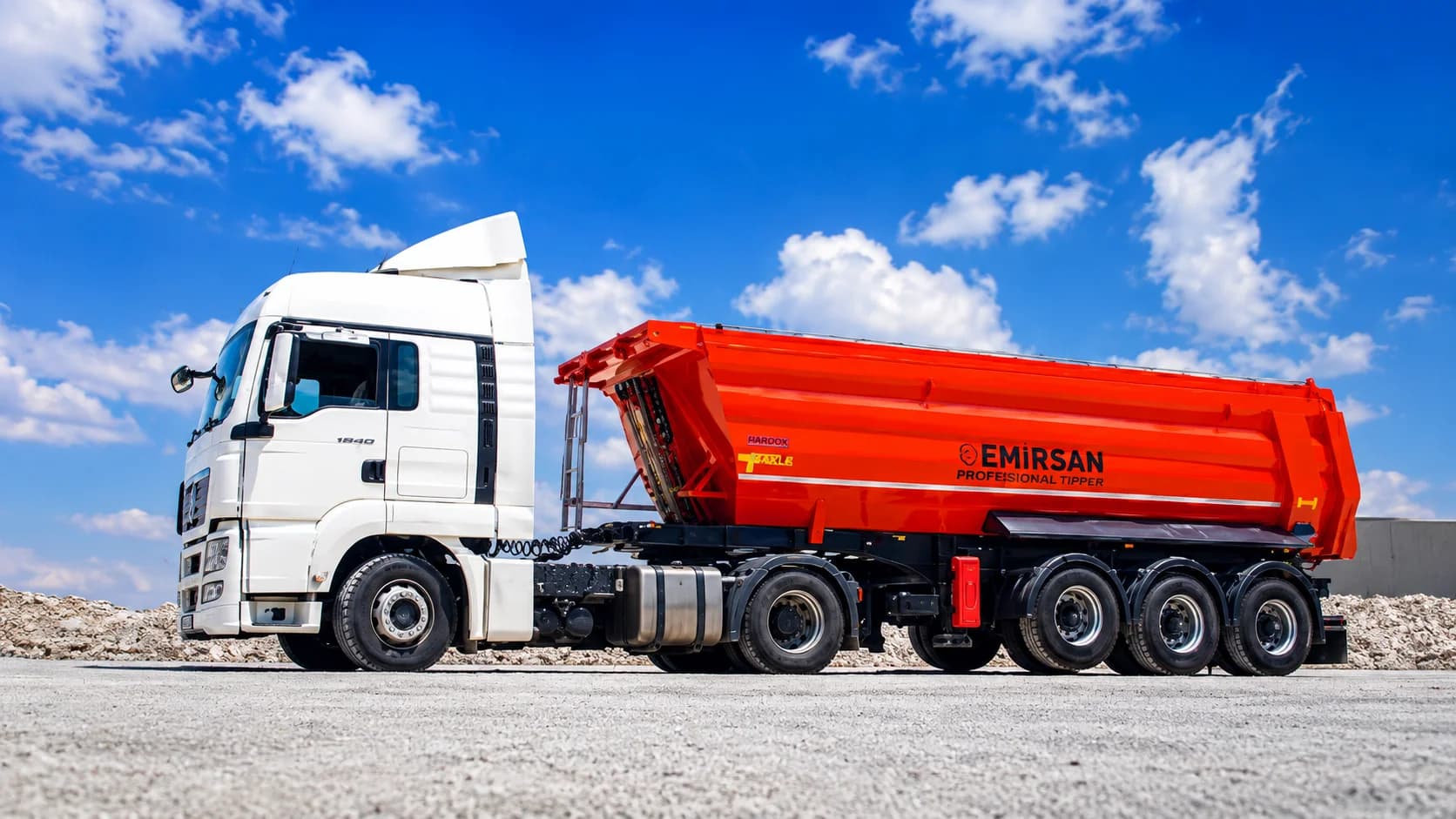
Tipper Semi Trailer: Applications, Safe Operation, Material Selection and Chassis Design Guide
A tipper semi trailer, also known as a dump semi trailer, rear tipper trailer, or tipping semi trailer, is a heavy-duty transport vehicle designed for the efficient transportation and unloading of bulk materials.
Tipper semi trailers are widely used in the construction, mining, quarrying, infrastructure, agriculture, waste management, and bulk material transportation industries. Their hydraulic tipping systems allow cargo to be discharged quickly by raising the trailer body and releasing the material through the rear section.
For transport companies, contractors, and fleet operators, choosing the right tipper semi trailer is essential for achieving high payload capacity, safe unloading, structural durability, reduced maintenance costs, and long-term operational efficiency.
A professionally engineered tipper trailer must provide the correct balance between tare weight, payload, body strength, chassis durability, hydraulic performance, and operational safety.
1. Main Applications of Tipper Semi Trailers
One of the greatest advantages of a tipper semi trailer is its versatility. Depending on body design, steel grade, volume, and chassis configuration, these trailers can transport a wide range of bulk materials across multiple industries.
1.1 Construction Material Transportation
Tipper semi trailers are extensively used on construction projects for transporting:
- Sand
- Gravel
- Crushed stone
- Soil
- Aggregate
- Asphalt-related materials
- Excavated material
Their hydraulic rear tipping system enables fast unloading at construction sites, batching plants, and infrastructure projects, helping reduce turnaround time and improve fleet productivity.
1.2 Mining and Quarry Operations
Mining and quarry applications place extremely high demands on trailer durability.
Tipper trailers are commonly used to transport:
- Stone
- Ore
- Coal
- Gravel
- Crushed rock
- Mineral materials
- Quarry products
These demanding environments often require reinforced chassis structures and highly wear-resistant body materials. For abrasive cargo such as rocks and minerals, selecting the appropriate body floor and sidewall material is particularly important.
High-strength wear-resistant steels such as Hardox are frequently used because they offer excellent resistance to abrasion and impact while supporting optimized body construction.
1.3 Sand and Aggregate Transportation
Sand, gravel, and aggregates are among the most common materials transported with tipper semi trailers.
These materials are widely used in:
- Concrete production
- Road construction
- Asphalt production
- Building construction
- Infrastructure projects
Trailer capacity should always be selected according to the density of the transported material. A larger body volume does not necessarily mean the trailer can legally carry more payload.
Actual payload depends on factors including:
- Material density
- Trailer tare weight
- Tractor configuration
- Number and capacity of axles
- Legal gross vehicle weight
- Local axle-load regulations
1.4 Excavation and Earthmoving Projects
Tipper semi trailers play an essential role in removing soil and excavated material from construction sites.
Typical applications include:
- Building foundations
- Highway construction
- Tunnel projects
- Industrial construction
- Urban development
- Land preparation
Because trailers may complete multiple loading and unloading cycles every day, durability and fast unloading performance are especially important.
1.5 Agricultural Bulk Transportation
Depending on body configuration, tipper trailers can also transport agricultural bulk products such as:
- Grain
- Corn
- Wheat
- Fertilizer
- Animal feed
- Other agricultural bulk products
Agricultural cargo generally has a lower density than minerals or aggregates, making larger-volume bodies more suitable for maximizing transport efficiency.
Selecting the correct body size should always be based on the specific material being transported.
1.6 Scrap and Recycling Transportation
Specially designed tipper trailers are also used in recycling and industrial material handling.
Typical applications include:
- Metal scrap
- Industrial waste
- Recyclable materials
- Demolition materials
These operations often require reinforced body construction because irregular or sharp materials can create high impact and abrasion loads.
2. Important Safety Considerations When Operating a Tipper Semi Trailer
Safe tipping operations require careful attention to the trailer, the cargo, and the unloading environment.
2.1 Always Unload on Stable and Level Ground
This is one of the most important safety rules during tipping operations.
As the trailer body rises, the center of gravity moves significantly upward. If unloading takes place on uneven, soft, or sloping ground, the risk of instability or rollover increases considerably.
Before raising the body, operators should confirm that:
- The ground is level and stable.
- The surface can safely support the vehicle's weight.
- The tractor and trailer are properly aligned.
- The wheels are stable.
- There are no dangerous side slopes.
Operators should never rely solely on the suspension system to compensate for unstable ground conditions.
3. Hardox Steel in Heavy-Duty Tipper Semi Trailers
Material selection is one of the most important factors affecting tipper trailer durability.
For heavy-duty and abrasive applications, wear-resistant steels such as Hardox are widely used in tipper body construction.
Depending on engineering requirements, Hardox steel may be used for:
- Body floor
- Sidewalls
- Front wall
- Rear door
- Other high-wear areas
Advantages of Wear-Resistant Steel
Properly selected high-strength wear-resistant steel can provide:
- Excellent abrasion resistance
- High impact resistance
- Longer body service life
- Reduced material thickness compared with some conventional steels
- Potential tare-weight optimization
- Improved durability in demanding operating conditions
However, thicker steel does not automatically produce a better trailer.
Modern trailer engineering focuses on selecting the correct steel grade, thickness, and structural design for the intended application.
For example, a trailer designed for transporting sand does not require the same body specification as one intended for large rocks or quarry materials.
4. Chassis Design and Structural Strength
The chassis forms the structural foundation of every tipper semi trailer and must withstand a wide range of operating forces throughout its service life.
These include:
- Cargo weight
- Dynamic road loads
- Torsional forces
- Tipping forces
- Braking forces
- Repeated loading cycles
A properly engineered chassis provides the necessary structural strength while avoiding unnecessary weight that could reduce payload capacity.
High-strength structural steels help manufacturers achieve an effective balance between durability, tare weight, and payload capacity.
Critical structural areas include:
- Main beams
- Crossmembers
- Kingpin area
- Suspension mounting points
- Rear tipping pivot area
- Hydraulic cylinder mounting points
These components should be carefully engineered to withstand the expected operating loads while delivering long-term reliability, safety, and performance.