
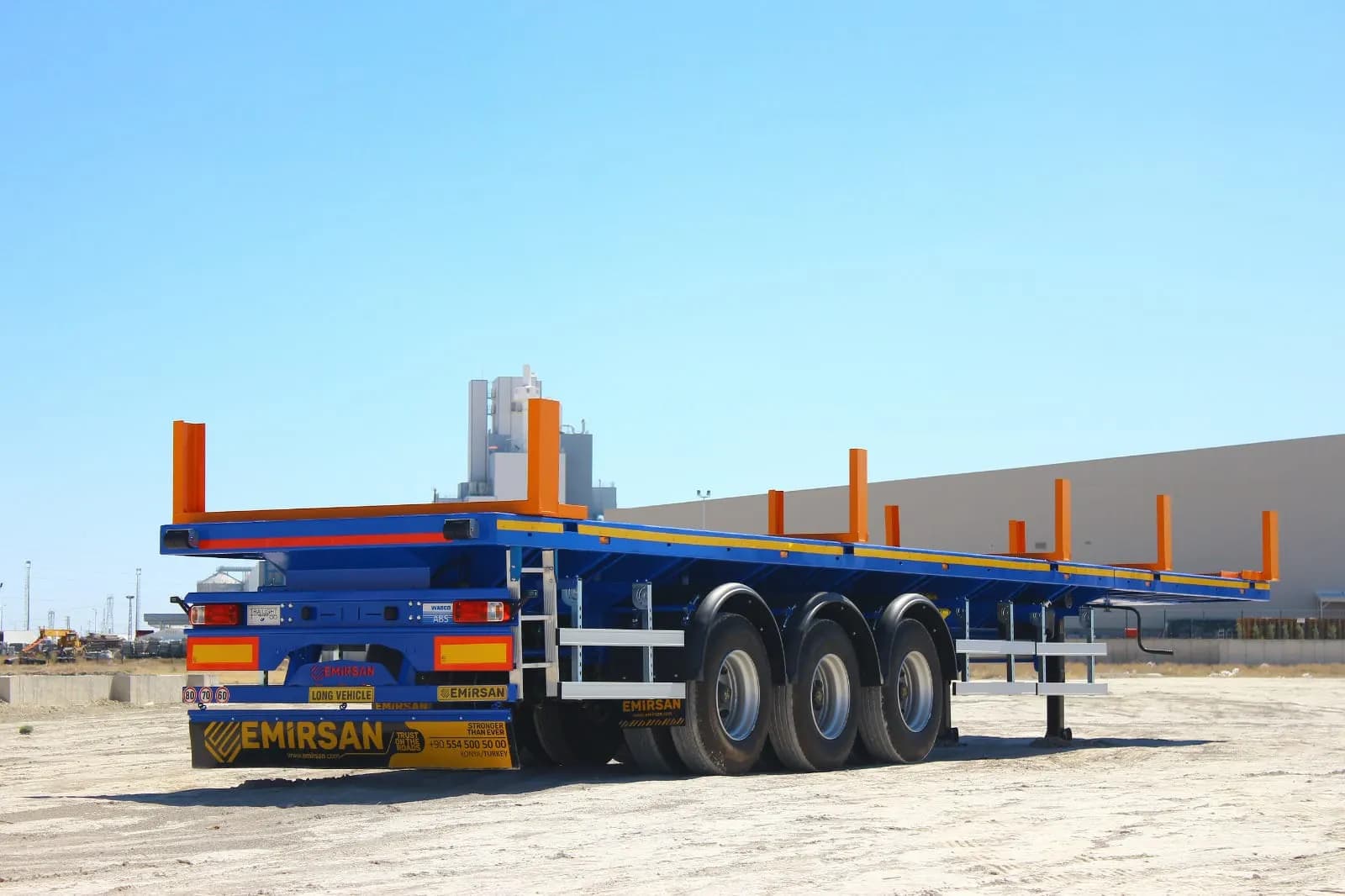
Choose a flatbed semi trailer if your cargo is loaded by crane or forklift and does not need walls around it; choose a dropside if the load is loose, stacked or palletized and has to be held in by side boards. Both are built on the same platform chassis at our Konya factory, so the decision comes down to the cargo, the way it is loaded and the weight you can afford to carry as tare.
What a flatbed semi trailer does best
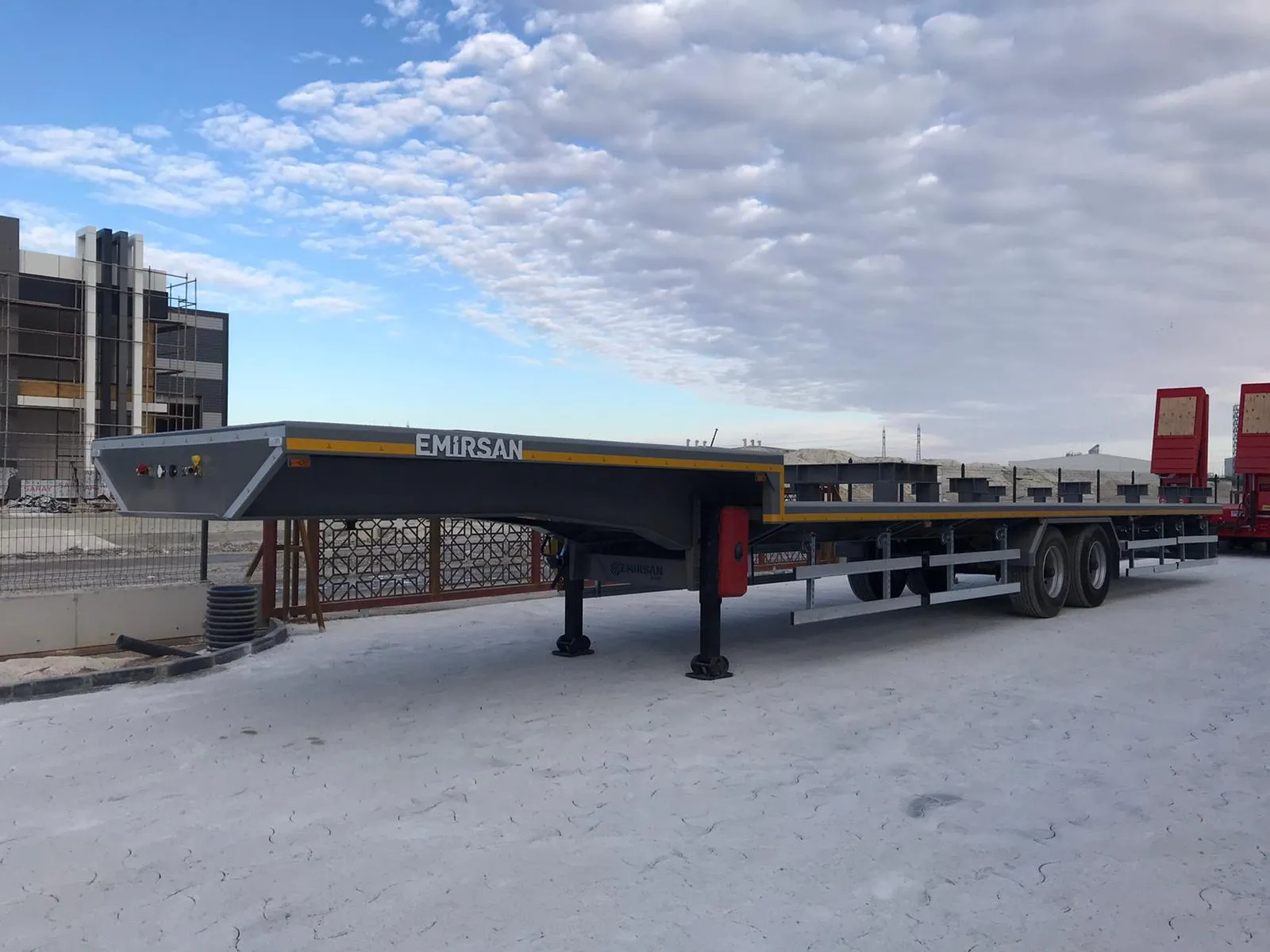
A flatbed is an open deck with nothing in the way. Cranes can drop steel coils, beams and pipes from above, forklifts can work from both sides, and long or oversized items can overhang where regulations allow. With Euro-type twist locks — we fit between 4 and 12 — the same deck also carries containers.
- Typical loads: steel coils, beams, pipes, machinery, containers, big bags, palletized goods that are strapped down
- Deck: metal or wooden platform, 13.6 m as standard and custom lengths from 6 to 28 m
- Axles: 2 to 4, BPW, SAF or Turkish-origin; air, mechanical or bogie suspension
- Load securing: lashing rings along both sides, rope hooks, optional twist locks
What a dropside adds
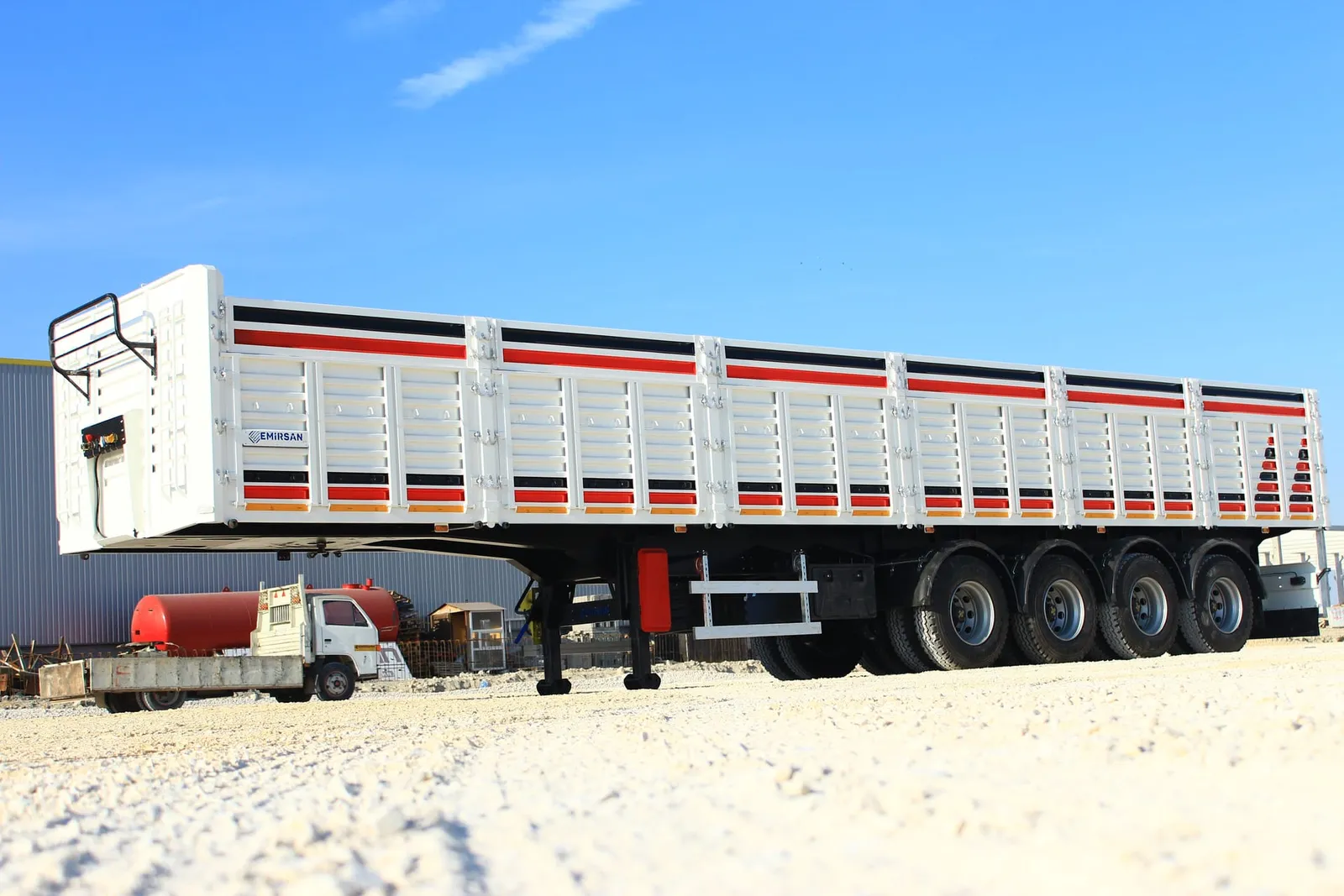
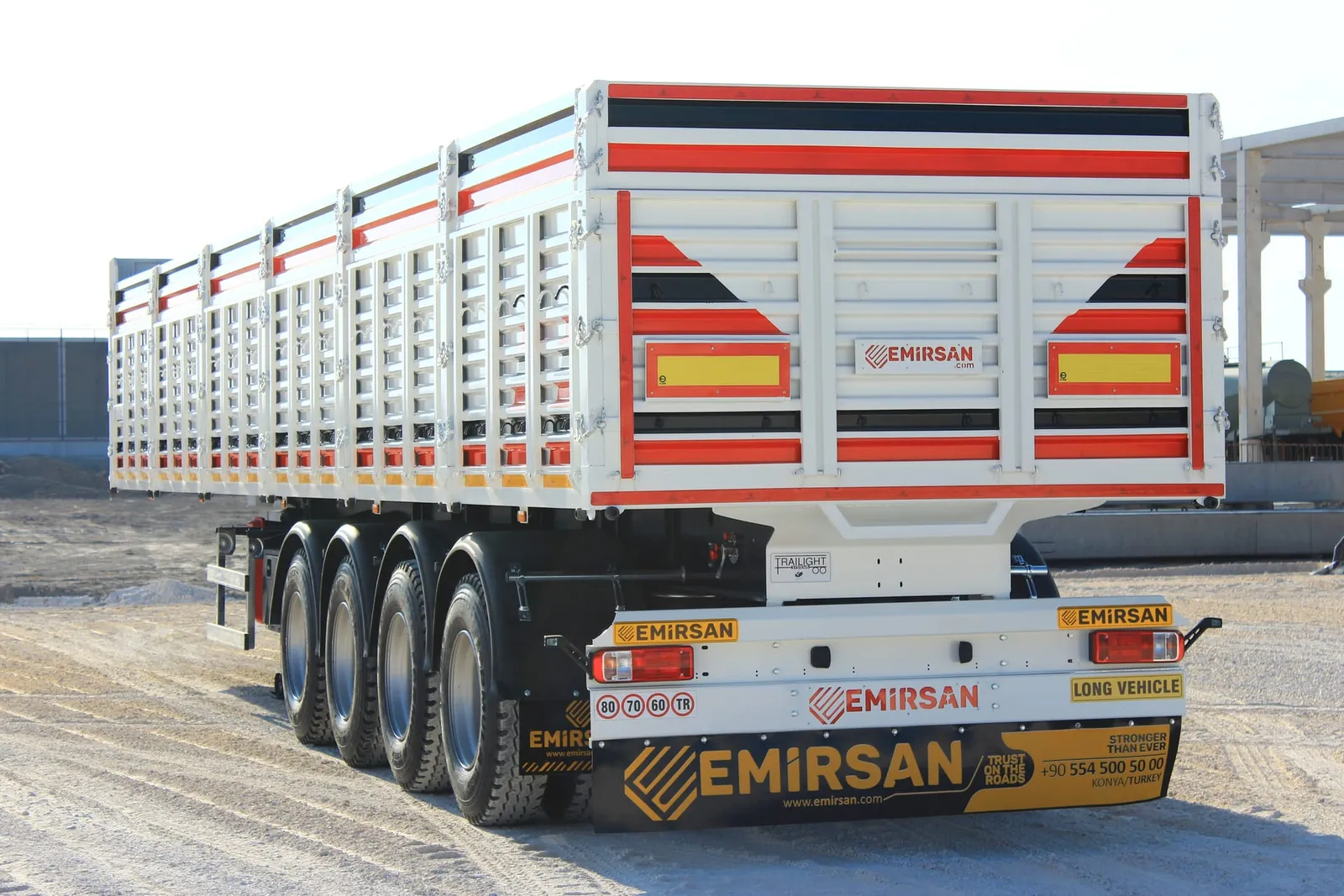
A dropside semi trailer is a flatbed with side boards. The boards are steel or aluminium, usually 600 to 1,000 mm high, and they are either hinged so they fold down or fully removable. Folded down, the deck loads like a flatbed; raised, it keeps bricks, building materials, agricultural produce and pallets from shifting or falling off.
Five questions that decide it
- Does the load need to be contained? Loose, stacked or bagged goods need side boards. Single heavy items that are chained down do not.
- How is it loaded? Crane from above or forklift from the side works on both, but on a dropside the boards must be lowered first. If every load is craned, a flatbed is simpler.
- Will you carry containers? Specify twist locks. A flatbed with twist locks gives you containers and general cargo on one trailer.
- How much tare can you accept? Side boards add weight that comes off your payload. Aluminium boards are lighter than steel ones.
- Is your work mixed? A dropside with fully removable boards can run as a flatbed when the boards are taken off — one trailer for both jobs.
What to include in your quote request
We build every platform trailer to order, so the more precise the request, the faster and more accurate the offer. Tell us:
- deck length and the cargo you will carry most often
- number of axles, axle brand and suspension type
- deck material (metal or wood)
- number of twist locks, if you carry containers
- for a dropside: board height, board material and hinged or removable boards
- tyre preference (Pirelli, Bridgestone or Goodyear)
WABCO ABS/EBS braking and a 98/91/EEC-approved steel chassis are standard on both models.
See the models
Specifications, photos and videos are on the flatbed semi trailer and dropside semi trailer pages, and the whole platform trailer family is in one place. When you know roughly what you need, send us your cargo and route and our export team will come back with a configuration and price.